
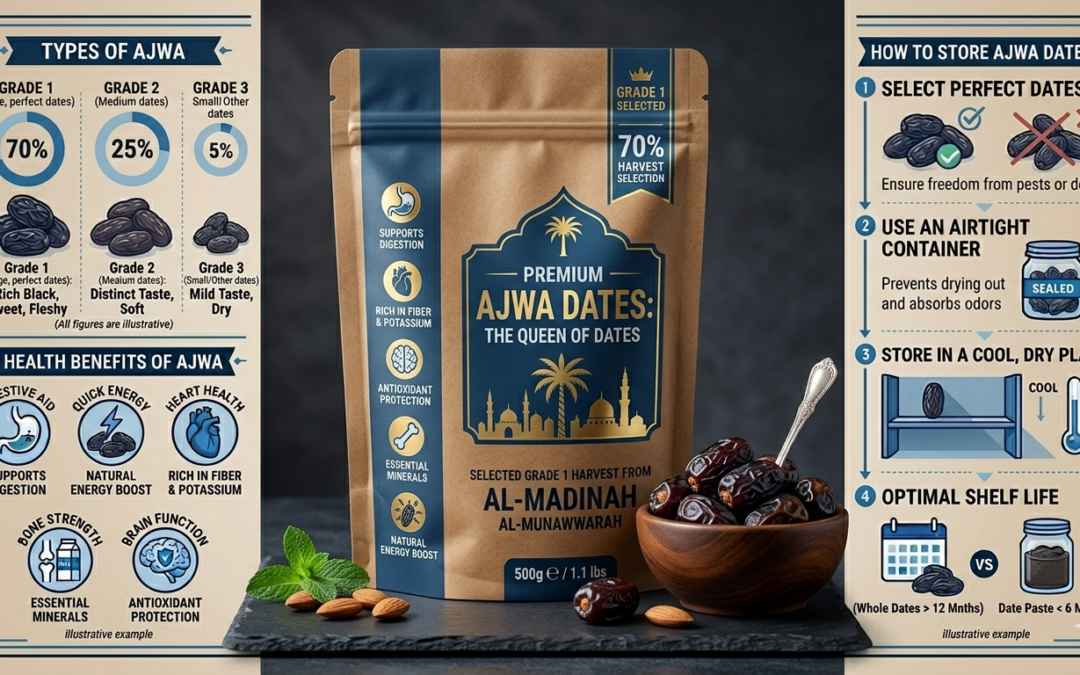
Ajwa dates are among the most prized and expensive date varieties in the world, known for their soft black skin, rich caramel flavor, and dense nutritional profile. Originating from Medina in Saudi Arabia, these dates have been valued for centuries not just for taste, but for their impressive health properties. Whether you’re eating them as a daily health supplement, incorporating them into your diet for specific benefits, or considering them as an export opportunity, understanding their nutritional value and practical applications is essential.
Table of Contents
- What Are Ajwa Dates?
- Nutritional Value
- Calories Per Piece and Per 100g
- Health Benefits of Dates
- Supports Heart Health
- Promotes Digestive Health
- Rich in Antioxidants
- May Support Bone Strength
- Provides Natural Energy
- Supports Immune Function
- Benefits for Men
- Benefits for Women
- Benefits During Pregnancy
- Benefits for Skin
- Benefits for Hair
- Dates Good for Weight Loss?
- Can Dates Help With Weight Gain?
- Are Dates Good for Diabetics?
- Glycemic Index of Dates Explained
- How Many Dates Should You Eat Daily?
- Best Time to Eat Dates
- How to Include Dates in Your Diet
- Ajwa Dates vs Other Date Varieties
- Ajwa vs Medjool Dates
- Ajwa vs Safawi Dates
- Ajwa vs Deglet Noor Dates
- How to Identify Original Ajwa Dates
- Potential Side Effects of Eating Too Many Ajwa Dates
- Who Should Avoid Ajwa Dates?
- How to Store Ajwa Dates Properly
What Makes Ajwa Dates?
Ajwa dates, known in Arabic as عجوة, are a distinctive cultivar of the date palm Phoenix dactylifera. Their origin is closely tied to Madinah, Saudi Arabia, one of the holiest cities in Islam. The palms grow in the region’s volcanic soil and arid climate, and that natural environment plays a major role in shaping their taste, texture, and overall quality. This is one of the main reasons authentic Madini Ajwa dates often taste noticeably different from dates grown in other regions.
Appearance and Texture
Authentic Ajwa dates have a few clear visual and physical characteristics:
- Dark, near-black skin with a naturally wrinkled surface
- Oval to round shape and medium size
- Soft, dense flesh with a dry-to-semi-dry bite
- Less sticky than Medjool dates
- Mild sweetness with a subtle nutty, slightly smoky flavor profile
- Fine white streaks or lines on the skin, which are often seen as a natural sign of genuine Ajwa dates
Origin
Ajwa dates hold deep religious and cultural value, especially in Islamic tradition. Because of their association with Madinah, they are widely respected and highly sought after. They are also one of the most recognized premium date varieties in the world.
Cultural Importance
Thousands of tons are exported every year from Madinah’s palm plantations, making Ajwa an important agricultural product for Saudi Arabia. Demand remains especially strong in South Asia, Southeast Asia, the Middle East, and Muslim diaspora communities worldwide.
Nutritional Value of Ajwa Dates
Ajwa dates are nutrient-dense fruits packed with natural sugars, fiber, minerals, and antioxidants that make them stand out even among other date varieties. A single medium Ajwa date (around 20g) contains approximately 60 calories, while a 100g serving (roughly 5–6 dates) contains around 280–290 calories. However, the caloric content is only part of the story what matters more is what those calories come with.
Per 100g of Ajwa Dates (approximate):
| Nutrient | Amount |
|---|---|
| Calories | ~350 kcal |
| Carbohydrates | ~82.5 g |
| Natural Sugars | ~20 g |
| Dietary Fiber | ~7.5 g |
| Protein | ~2.5 g |
| Fat | 0 g |
| Potassium | ~875 mg |
| Calcium | ~50 mg |
| Iron | ~1 mg |
| Cholesterol | 0 mg |
| Sodium | 0 mg |
Calories and Macronutrients in Ajwa Dates
A single Ajwa date weighing about 20 grams provides roughly 60 calories, with most of those calories coming from natural carbohydrates. These carbohydrates are primarily in the form of naturally occurring sugars such as glucose and fructose, making Ajwa dates a quick and convenient source of energy. Per 100 grams, Ajwa dates contain approximately 280–290 calories, though the exact value can vary depending on moisture content and growing conditions.
Are Ajwa Dates Good for Weight Management?
Ajwa dates are considered a calorie-dense food, which makes portion control important for individuals focused on weight management. However, unlike many processed snacks, each date is naturally portioned and highly satisfying. This helps reduce the likelihood of overeating. Their natural sugar content is balanced by dietary fiber, which promotes satiety and supports a more gradual release of energy throughout the day.
Fiber, Minerals, and Nutritional Value
Beyond calories, Ajwa dates offer an impressive nutritional profile. A 100g serving typically contains 8–10 grams of dietary fiber, which helps slow sugar absorption and supports digestive health. They also provide valuable minerals, including:
- Potassium: 700–800mg
- Magnesium: 60–70mg
- Calcium: Around 60mg
- Iron: 2–3mg
- Zinc, Copper, and Manganese: Present in smaller amounts
Ajwa Dates Benefits for Your Body
The health benefits of Ajwa dates are multifaceted, supported both by traditional use and modern nutritional science. Rather than overstating benefits, it’s more useful to understand what Ajwa dates can realistically contribute to a health-conscious diet.
Ajwa Dates for Energy and Stamina
The combination of fast-absorbing natural sugars and slow-releasing fiber makes Ajwa dates an ideal pre-workout or pre-activity food. Athletes and active people often eat 2–3 Ajwa dates about 30 minutes before exercise the quick energy boost is immediate, and the fiber prevents a subsequent energy crash. For anyone managing afternoon fatigue or looking for a cleaner alternative to caffeine or energy drinks, a single date provides 60 calories of pure energy with no synthetic additives.
Powerful Antioxidant Protection
Ajwa dates contain one of the highest concentrations of polyphenols and flavonoids among all date cultivars. These compounds neutralize free radicals unstable molecules that damage cells, accelerate aging, and are linked to chronic diseases including cancer and cardiovascular disease.
A study published in the Journal of Food Science and Technology found that the antioxidant activity of ajwa dates was significantly higher than several other common date varieties. Consuming 3–5 ajwa dates daily can meaningfully raise your dietary antioxidant intake, especially if your fruit and vegetable consumption is inconsistent.
Ajwa Dates for Heart Health
The potassium content in Ajwa dates is significant a 100g serving provides 700–800mg, which is roughly 20% of the daily requirement. Potassium is essential for heart rhythm, blood vessel function, and blood pressure regulation. The magnesium content (60–70mg per 100g) also supports cardiovascular health by promoting healthy blood pressure and reducing arterial stiffness. Additionally, Ajwa dates contain polyphenols and flavonoids — antioxidants that protect the cardiovascular system from oxidative stress.
Gut Health and Digestive Regularity
The 7.5g of dietary fiber per 100g makes ajwa dates among the better high-fiber snack options available. This fiber works in two ways: insoluble fiber speeds up gut motility (reducing constipation risk), while soluble fiber acts as a prebiotic feeding beneficial gut bacteria like Lactobacillus and Bifidobacterium.
People who eat ajwa dates regularly often report improved digestive regularity within a week or two of consistent use. The soft, dense texture makes them easy to digest even for people with sensitive stomachs — something that can’t always be said of fiber supplements or raw vegetables.
Natural Energy Without the Crash
Unlike refined sugar or processed energy bars, the natural sugars in ajwa dates (primarily fructose, glucose, and sucrose) are packaged alongside fiber, which modulates the speed at which glucose enters the bloodstream. This means you get sustained energy not a spike followed by a crash.
This is why athletes, especially those doing endurance training, have started incorporating dates as a clean, whole-food energy source. Ajwa dates and nuts combined (think: 3–4 dates with 10–12 almonds or walnuts) make an excellent pre-workout snack providing carbohydrates for fuel and healthy fats for satiety and recovery.
Bone Strength and Mineral Density
Ajwa dates provide a notable combination of calcium, phosphorus, magnesium, and manganese — all minerals involved in bone matrix formation and maintenance. While a single serving won’t replace your calcium supplement if you’re deficient, consistent daily intake over months can contribute meaningfully to bone mineral density.
This is particularly relevant for women over 40, postmenopausal individuals, and elderly adults who are at higher risk for osteoporosis. Ajwa’s magnesium content is especially valuable here because magnesium is necessary for the conversion of vitamin D into its active form meaning it indirectly helps your body absorb calcium from all dietary sources.
Immune System and Anti-Inflammatory Properties
The selenium content in ajwa dates is one of its most underappreciated features. Selenium is a trace mineral that’s essential for the proper functioning of T-cells and other immune system components. Many people — particularly those in South Asia are subclinically selenium-deficient due to soil depletion.
The beta-glucan and polysaccharide content of ajwa also stimulates innate immunity. Studies have shown anti-tumor properties in date palm polysaccharides, though this research is still in early stages and shouldn’t be interpreted as a cancer cure claim.
Liver Protection
Traditional medicine texts (including classical Unani and Islamic medical literature) mention ajwa dates specifically in the context of liver protection. Modern phytochemistry research supports this: the flavonoid compounds in ajwa particularly quercetin and kaempferol have demonstrated hepatoprotective (liver-protecting) activity in animal studies.
If you consume alcohol, take regular medications, or live in a high-pollution environment, oxidative stress on the liver is real. Incorporating ajwa regularly as part of an overall clean diet is a practical, accessible way to support detoxification pathways.
Ajwa Dates Powder Benefits and Uses
The powder is a processed form offering unique benefits and applications beyond whole dates.
Production and Processing
Ajwa date powder is made by pitting whole dates, drying them further, and grinding into fine powder. The process concentrates nutrients (pound for pound, powder is more nutrient-dense than whole dates), extends shelf life dramatically (2–3 years versus 6–12 months for whole dates), and creates a product suitable for industrial food applications, supplements, and culinary use.
Nutritional Benefits of Powder Form
In powder form, 100g contains roughly 400–450 calories (compared to 280–290 in whole dates) because the water has been removed. This means 10g of powder provides the nutrient equivalent of 3–4 whole dates in concentrated form. The fiber remains intact, the mineral content is identical, and the antioxidants are unaffected. Powder offers convenience — no waste, no pitting, longer shelf life — while maintaining full nutritional profile.
Practical Uses of Ajwa Date Powder
In smoothies and shakes: 1–2 tablespoons mixed into protein shakes or fruit smoothies adds sweetness, fiber, and minerals without refined sugar. Creates naturally sweet breakfast drinks.
In baking: Replaces some refined sugar in cakes, cookies, and breads. Uses 3–4 tablespoons of powder per recipe to maintain texture.
In porridges and oatmeal: Stir 1–2 tablespoons into warm oatmeal for natural sweetness and added nutrition. No separate sweetener needed.
As a supplement: 1 tablespoon daily mixed into water, milk, or juice serves as a concentrated nutrient boost for athletes, elderly people, or anyone seeking enhanced mineral intake.
In energy balls and bars: Mixed with nuts, coconut, and ghee to create no-cook energy balls. 1 part powder to 2 parts nuts creates nutrient-dense snacks.
In face masks and skincare: The antioxidants and minerals in date powder have been used traditionally for skin health. Mixed with honey or yogurt as a natural face mask.
In pet nutrition: A small amount of date powder can be added to pet food for additional nutrients, though veterinary guidance is important for proper dosing.
Sourcing and Quality
Quality Ajwa date powder should be 100% pure dates with no additives, fillers, or preservatives. Check labels for certifications and organic status if important to you. Reputable suppliers provide testing for contaminants and verify the source of dates used in processing.
When You Eat Ajwa Dates Daily?
Regular consumption of Ajwa dates creates a cascade of effects on the body, both immediate and cumulative. Understanding these changes helps you use Ajwa dates strategically based on your health goals.
Immediate Effects (First 30 Minutes)
When you consume Ajwa dates, the natural sugars are rapidly absorbed into the bloodstream, providing fast energy that’s particularly useful before physical activity or when mental fatigue sets in. This is why dates were traditionally eaten by travelers and athletes the energy boost is real and noticeable within 15–30 minutes.
Short-Term Effects (1–7 Days)
Within a week of daily Ajwa date consumption, most people report improved energy levels and more stable afternoon energy dips. Digestion typically becomes more regular as the fiber accumulates in the system. Sleep quality often improves, partly because the natural sugars support serotonin production and the mineral content supports nervous system function.
Long-Term Effects (4–12 Weeks)
Over months of consistent daily consumption, the cumulative mineral intake particularly potassium, magnesium, and iron begins to show measurable effects. Energy becomes more stable throughout the day. Digestive function improves significantly. Blood pressure may normalize (potassium supports this). Heart rate variability often improves. Bone density markers improve in some individuals, particularly women over 40.
Understanding the Sugar Content of Ajwa Dates
Whether Ajwa dates are suitable for people with diabetes is not a simple yes-or-no question. While Ajwa dates naturally contain sugars such as glucose and fructose, they also provide fiber, antioxidants, and essential minerals that influence how the body processes those sugars. Unlike refined sweets, Ajwa dates offer additional nutritional value, making them a more nutrient-dense source of carbohydrates.
Glycemic Index and Blood Sugar Response
Ajwa dates have a moderate to low glycemic index (GI), typically ranging between 42 and 55, depending on factors such as variety, ripeness, and testing methods. A lower GI means that blood sugar levels tend to rise more gradually compared to high-GI foods. The fiber content in Ajwa dates helps slow digestion and sugar absorption, which may reduce the likelihood of sudden glucose spikes.
Potential Benefits of Ajwa Dates for Diabetics
In addition to fiber, Ajwa dates contain nutrients that support overall health. They provide potassium, magnesium, and antioxidants, which contribute to heart health and cellular function. Since people with diabetes often face a higher risk of cardiovascular complications, incorporating nutrient-rich foods into a balanced diet can be beneficial. However, these benefits do not eliminate the need for portion control.
Daily Recommended Intake and Portion Control
Moderation is essential when consuming Ajwa dates. Many nutrition experts suggest limiting intake to 1–2 dates at a time, ideally alongside foods rich in protein, healthy fats, or fiber, such as nuts, yogurt, or seeds. Pairing Ajwa dates with these foods can help slow carbohydrate absorption and promote better blood sugar management compared to eating dates alone.
When Should Diabetics Avoid or Limit Ajwa Dates?
People who experience frequent blood sugar fluctuations, have poorly controlled diabetes, or are adjusting medications should be particularly cautious. Eating several dates on an empty stomach may cause a noticeable increase in blood glucose levels. Regular blood sugar monitoring can help determine how the body responds to Ajwa dates and whether they fit into an individual’s dietary plan.
Ajwa Dates for Weight Gain or Weight Management
The calorie density and high natural sugar content of Ajwa dates make them useful for weight gain programs. People recovering from illness, building muscle, or managing low body weight often use Ajwa dates as part of a caloric surplus strategy they’re nutrient-dense (not empty calories), satisfying, and easy to eat in quantity. Eating 5–10 Ajwa dates daily, combined with nuts and milk, creates a caloric surplus that supports healthy weight gain over weeks and months. Using them as a measured, pre-portioned snack (2–3 dates) rather than eating from a bulk package is the key to weight management success.
Best Time to Eat Ajwa Dates
Timing affects how your body processes and benefits from Ajwa dates, and different times serve different purposes.
Early morning on an empty stomach
This is traditional Prophetic tradition eating Ajwa dates first thing in the morning is believed to provide energy and protection. Nutritionally, this provides quick blood sugar rise and sustained energy for the morning ahead. Best if followed by a protein-containing breakfast.
Pre-workout (30 minutes before)
The quick sugar and carbohydrates make dates ideal pre-workout fuel. The energy boost is rapid and supports exercise performance.
Post-workout (within 2 hours)
The fast-absorbing sugars help replenish muscle glycogen, and the potassium supports electrolyte balance after exertion.
With meals
Eating dates as part of a balanced meal (with protein, fat, and other carbohydrates) moderates blood sugar rise and improves satiety.
Mid-afternoon (2–3 pm)
For people experiencing afternoon energy dips, a date provides a clean boost without caffeine jitters.
Evening before bed
A date or two, combined with warm milk, can promote sleep due to the natural serotonin precursors and minerals that support relaxation.
Avoid
Eating large quantities on an empty stomach late at night can cause blood sugar spikes right before sleep, potentially disrupting rest quality.
How Many Ajwa Dates Should You Eat Daily?
The right number depends on your goal, your current health, and what else you are eating that day. Ajwa dates are a carbohydrate-rich food, so portion size matters. For people with diabetes, the ADA recommends balancing carb foods with lean protein, choosing higher-fiber carbs when possible, and checking blood glucose to understand your personal response.
1. For General Health
For most adults, 2–3 Ajwa dates per day is a practical everyday amount. This keeps the portion moderate while still giving you a nutrient-dense snack that fits easily into a balanced diet.
2. For Energy and Workout Support
For training days or high-activity periods, 3–5 dates per day can work well, especially before or after exercise. Since dates are carb-heavy, they are useful when you need quick, natural energy.
3. For Digestion and Regularity
For digestive support, 4–6 dates per day, split across the day, may be a reasonable range. The fiber in dates is one reason they can be filling and supportive of gut health. Fiber-rich carbs are generally a better choice than refined snack foods.
4. For Weight Gain or Recovery
For weight gain or post-illness recovery, 6–10 dates per day can fit into a calorie surplus, especially when combined with milk, nuts, nut butter, or yogurt. Pairing carb foods with protein is also a smart way to slow digestion and improve satiety.
5. For Weight Management
For weight loss or weight maintenance, limit to 2 dates per day and eat them with protein or healthy fat. This helps keep your overall calorie intake under control while avoiding a sugar-only snack.
6. For Diabetics
For diabetics, the answer is individual. Some people may tolerate 1–2 dates per day with monitoring, while others may need to avoid them or eat them only occasionally. The safest approach is to test your own blood glucose response, especially after meals and snacks, because food choices can significantly affect blood sugar levels.
Ajwa Dates with Milk, Nuts, and Honey
Combining Ajwa dates with other nutrient-dense foods creates synergistic health effects and improved satiety.
Ajwa Dates with Milk
The classic combination of Ajwa dates soaked in warm milk is both traditional and nutritionally sound. The dates provide natural sweetness and fast carbohydrates; the milk provides protein, calcium, and vitamin D. Together, they create a complete snack that supports bone health, muscle recovery, and relaxation before sleep. Soak 3–5 dates in warm milk for 10 minutes to soften them, then drink the milk and eat the dates. This preparation is particularly useful for children (supports growth), athletes (supports recovery), elderly people (supports bone and muscle), and anyone with low energy.
Ajwa Dates with Nuts
Dates and nuts create a perfectly balanced snack. The dates provide quick energy; the nuts provide protein, healthy fat, and micronutrients that slow sugar absorption and extend satiety. A handful of Ajwa dates combined with almonds, walnuts, or cashews creates a portable, shelf-stable, nutrient-complete snack that supports energy, brain function, and sustained appetite satisfaction. This combination is excellent for pre-workout, mid-morning energy, or afternoon fatigue.
Ajwa Dates with Honey
Adding raw honey to Ajwa dates intensifies the sweetness but also adds enzymes and additional antioxidants. This combination was traditionally used for immune support and energy restoration. A date stuffed with a small amount of honey, or dates soaked in honey, creates a concentrated superfood that’s used in some cultures as a daily wellness ritual. The combination is calorie-dense, so portion control is important — typically 2–3 dates with honey is a complete serving.
Ajwa Dates vs Medjool Dates: Comparison
The comparison between Ajwa and Medjool dates is important because both are premium varieties, but they have different nutritional profiles and best uses.
Medjool dates are larger, sweeter, and have a caramel flavor. They’re easier to find globally and are less expensive than Ajwa dates. Nutritionally, they’re comparable — both are high in fiber, potassium, and minerals. However, Medjool dates have a slightly higher sugar content and softer texture. For eating fresh or in applications where the large size is beneficial (like stuffing with nuts), Medjool dates are excellent.
| Feature | Ajwa Dates | Medjool Dates |
|---|---|---|
| Origin | Madinah, Saudi Arabia | Morocco, USA, Middle East |
| Size | Small to medium | Large, plump |
| Skin | Dark brown to black, dry | Light brown, moist, glossy |
| Texture | Dense, firm, slightly chewy | Soft, caramel-like, sticky |
| Sweetness | Mild-sweet, slightly smoky | Intensely sweet, toffee-like |
| Fiber (per 100g) | ~7.5g | ~6.7g |
| Calories (per 100g) | ~350 kcal | ~277 kcal |
| Antioxidant Profile | Very high (polyphenols, selenium) | Moderate |
| Religious/Cultural Weight | Significant in Islamic tradition | Widely consumed globally |
| Price Range (India) | ₹1,200–₹2,500 / 500g | ₹600–₹1,500 / 500g |
Ajwa dates are smaller, denser, with a subtle complex flavor rather than pure sweetness. They have a lower glycemic index than Medjool, making them slightly preferable for blood sugar management. The mineral content is marginally higher. The flavor is more sophisticated less obviously sweet, more savory and earthy. For people seeking superior nutritional density and more complex flavor, Ajwa dates are the premium choice. For value and global availability, Medjool dates work just as well.
How to Identify Authentic Ajwa Dates
The Ajwa date market has significant counterfeiting due to price premium knowing how to identify authentic dates protects your investment and ensures you’re getting the nutritional benefits you’re paying for.
Origin verification
Authentic Ajwa dates come from Medina, Saudi Arabia. Reputable suppliers provide certificates of origin. If a vendor can’t verify the source, the dates are likely not genuine Ajwa.
Color and appearance
Genuine Ajwa dates are dark brown to nearly black, with a wrinkled skin texture. The surface should look natural, not artificially darkened. The date should be moderately soft but hold its shape — not mushy.
Aroma
Real Ajwa dates have a distinct, subtle caramel and slightly floral aroma. If dates smell overly sweet or artificial, they’re likely not authentic or have been treated with additives.
Taste test
Authentic Ajwa dates have a complex flavor — sweet but with subtle earthy, slightly tannic notes. Regular dates taste uniformly sweet. If the flavor is one-dimensional sweetness, the dates are likely a different variety.
Seed characteristics
Ajwa date seeds should be small and dark. Large, light-colored seeds suggest a different variety.
Price consistency
Authentic Ajwa dates are expensive roughly $20–40 per pound depending on market conditions. If dates labeled as Ajwa are significantly cheaper, they’re not genuine.
Supplier reputation
Buy from established importers or vendors with documented sourcing. Look for reviews, certifications, and transparent supply chains.
How to Store Ajwa Dates Properly
Proper storage extends shelf life from months to years while maintaining nutritional value and preventing quality degradation.
Temperature
Store in a cool, dry place — ideally 60–65°F if possible. Room temperature works fine for most climates; avoid hot, humid environments which promote mold growth. Refrigeration extends shelf life significantly (6–12 months at 40°F).
Container type
Use airtight glass jars or food-grade plastic containers. Avoid paper bags or permeable packaging, which allow moisture and air exchange. Vacuum-sealed bags are excellent for long-term storage.
Humidity control
Keep moisture low. If your storage area is humid, add food-grade silica gel packets to the container to absorb excess moisture. Replace every few months.
Light exposure
Store away from direct sunlight, which can accelerate degradation of the nutritional compounds. A dark cupboard is ideal.
Freezer storage
For longest preservation (1–2 years), store Ajwa dates in the freezer in airtight containers. They thaw quickly and maintain quality.
Inspection before storage
Remove any visibly damaged or moldy dates before storing. A single moldy date can contaminate an entire batch if not separated.
Label with purchase date
Mark the storage container with the date received so you can rotate stock and use older dates first.
How to Export Ajwa Dates
The Ajwa date export market is substantial, with demand growing globally. Understanding export logistics is essential for traders and producers.
Export Basics and Market Overview
Ajwa dates from Saudi Arabia are exported to over 50 countries, with major importers in India, Southeast Asia, the Middle East, and increasingly North America and Europe. Export volume is substantial — Saudi Arabia exports roughly 30,000–40,000 tons of Ajwa and premium date varieties annually. The market price fluctuates between $3,000–6,000 per ton depending on quality grade and global supply, making it a lucrative commodity for traders with proper logistics.
Pre-Export Quality Standards and Certifications
Before export, Ajwa dates must meet specific quality standards set by importing countries. Moisture content should be 12–15%. Defect levels must be below 5% (no mold, broken dates, or foreign material). Dates must be fumigated for insect control, typically with approved gas fumigation. Standard certifications required are ISO 9001 (quality management), FSSC 22000 (food safety), and country-specific organic or agricultural certifications.
Packaging for Export
Dates are typically packaged in 500g to 25kg boxes depending on the market. For bulk export, 25kg cardboard boxes with food-grade plastic liners are standard. Each box must include proper labeling: product name, origin, harvest date, packaging date, expiry date, nutritional information, and supplier details. For premium or retail exports to North America and Europe, smaller packaging (200g–1kg boxes) with attractive branding commands higher prices.
Documentation Requirements
Essential export documentation includes: commercial invoice, bill of lading, phytosanitary certificate (from Saudi agriculture authority), health certificate (confirming food safety standards), certificate of origin, and country-specific import permits. For EU imports, additional documentation on pesticide residues and microbiological testing is required. For US imports, FDA registration and import permits are mandatory.
Where to Export Ajwa Dates
The global export market has specific high-demand regions and niche markets that offer best value and easiest market entry.
Middle East and GCC countries
Despite Saudi Arabia’s production, neighboring countries like UAE, Kuwait, and Bahrain import substantial quantities. Distribution channels are established, import procedures are streamlined, and demand is consistent. Margins are typically lower due to competition, but volume and reliability are excellent.
India and South Asia
High-growth market with strong demand from health-conscious consumers and traditional users. Import tariffs exist but are navigable. Market prices are competitive but volume is high. Distributors are well-established in major cities.
Southeast Asia (Malaysia, Indonesia, Singapore)
Growing demand from Muslim populations and health-focused consumers. Singapore serves as a re-export hub. Less competitive than India, with slightly higher margins.
North America and Western Europe
Premium market with high pricing (50–100% premium over bulk markets). Requires small, attractive packaging and premium branding. Market is growing but distribution is smaller and requires stronger marketing.
Australia and New Zealand
Niche market with high prices but smaller volume. Good for premium, branded products.
Online direct-to-consumer
Platforms like Amazon, specialty food sites, and international e-commerce sites bypass traditional importers and offer highest margins. Requires compliance with multiple country regulations simultaneously.
Where to Import Ajwa Dates
For importers seeking to source Ajwa dates, understanding production centers and trade partners is critical.
Medina, Saudi Arabia:
The origin point. Direct sourcing from farms or local exporters is possible for large-volume buyers but requires established trade relationships and minimum order quantities (typically 5–10 tons). Prices are lowest at source, but buyers need proper export licenses and logistics.
Jeddah and Dammam (Saudi ports)
Major export hubs where dates are consolidated, packaged, and shipped. Largest concentration of exporters and best logistics infrastructure. Standard sourcing point for most international buyers.
Dubai, UAE
Re-export hub with significant date trading infrastructure. Prices are slightly higher than Saudi source (5–10% markup) but dates are already packaged, inspected, and ready to ship globally. Excellent for smaller importers.
Date trading platforms
Platforms like Alibaba, Global Sources, and specialized food importers connect buyers to suppliers directly. Prices vary widely; due diligence is essential.
Established import companies
Companies in your country that specialize in date imports can source for you, handle documentation, and manage logistics though margins are lower (supplier keeps 15–25% markup).
Direct relationships with Indian exporters
Some Indian export companies (like Chandrabhushan Global Exports) have established supply chains with Saudi and Middle Eastern producers and can provide competitively priced, certified Ajwa dates for re-export.
Logistics for Ajwa Dates
Successfully importing or exporting Ajwa dates requires understanding shipping, storage, and supply chain management.
Shipping Methods and Cost
Sea freight
20ft container holds 18–20 tons of dates. Cost from Saudi Arabia to India: $2,000–3,500. To Southeast Asia: $3,000–5,000. To North America: $4,000–7,000. Transit time: 2–4 weeks. Most economical for large volume (minimum 5 tons).
Air freight
Used for premium, time-sensitive shipments or small quantities. Cost is 5–10x higher than sea freight. Used mainly for express shipments to North America or Europe.
Land transport (within Middle East/South Asia)
Truck transport from Saudi Arabia to India costs $1,500–2,500 for 20 tons. Transit time: 4–6 days. Viable for India-focused traders.
Warehouse and Storage Logistics
Dates require climate-controlled storage to prevent mold and quality degradation. Standard cold storage facilities (45–55°F, 55–65% humidity) cost roughly $0.10–0.20 per kilogram per month in major ports. For long-term storage beyond 3 months, additional dehumidification or freezer storage is necessary. Port warehouse storage costs vary: roughly $1,000–2,000 per 20-ton container per month at major ports.
Distribution Within Importing Country
Once landed, dates must be distributed to retailers or consumers. In India, trucking from ports to major cities (Delhi, Mumbai, Bangalore) costs $0.05–0.15 per kilogram depending on distance. Final-mile delivery to consumers through e-commerce requires cold chain management if packaging requires refrigeration, adding $0.10–0.30 per unit.
Supply Chain Timeline
Full supply chain from Saudi exporter to Indian retail shelf typically takes: 2 weeks production and packaging, 2–4 weeks shipping, 1 week customs clearance, 2–3 days warehouse receipt and quality inspection, 3–7 days distribution to retail. Total: 4–7 weeks from export to retail shelf.
Ajwa Dates Price: What to Expect in 2025
Prices for ajwa dates vary considerably based on origin, quality grade, and packaging:
- India (online/retail): ₹800–₹2,500 per 500g for verified Madini ajwa
- UAE/Saudi Arabia (local): SAR 40–SAR 120 per kg depending on grade
- International (US/UK/Europe): $12–$30 per 500g for imported premium ajwa
If you find someone selling “ajwa dates” for ₹300–₹400 per 500g in India, treat it with extreme skepticism. Authentic Madini ajwa simply cannot be profitably imported and sold at that price point. Quality comes at a cost and with ajwa, the cost is part of the signal.
Ajwa Dates Plants
The ajwa dates tree is a Phoenix dactylifera cultivar that grows best in hot, arid climates with long dry summers and minimal rainfall. It thrives in the volcanic soil of Madinah but can technically be grown in other regions with similar climate profiles including parts of Rajasthan, Gujarat, and coastal Maharashtra in India.
Ajwa dates plants take 4–8 years to begin bearing fruit, and female trees require male pollination for fruit production. For most home growers, maintaining an ajwa tree as an ornamental date palm is realistic; commercially productive yields require significant agricultural expertise and the right microclimate.
Frequently Asked Questions
How many calories are in one Ajwa date?
A single medium Ajwa date (approximately 20g) contains roughly 60 calories, composed almost entirely of natural carbohydrates from glucose and fructose.
Can diabetics eat Ajwa dates?
Ajwa dates have a moderate glycemic index (42–55), making them lower than many other fruits. Some people with well-controlled diabetes can tolerate 1–2 dates daily with monitoring, but medical guidance is essential before incorporating them regularly.
What is the best time to eat Ajwa dates?
Optimal timing depends on goals: early morning for energy, 30 minutes before exercise for pre-workout fuel, with meals for moderated blood sugar, or evening with warm milk for sleep support. Avoid large quantities on an empty stomach late at night.
How do I know if Ajwa dates are authentic?
Authentic Ajwa dates are dark brown to nearly black with wrinkled skin, have a complex caramel-earthy aroma, come with certificates of origin from Medina, and cost $20–40 per pound. Counterfeits are usually cheaper, lighter colored, or uniformly sweet without complexity.
What is the difference between Ajwa and Medjool dates?
Medjool dates are larger and sweeter with simpler flavor. Ajwa dates are smaller, denser, with complex subtle flavor and slightly lower glycemic index. Nutritionally, both are comparable, but Ajwa has marginally higher mineral content.
How should I store Ajwa dates?
Store in airtight containers in a cool, dry place (60–65°F ideally). Refrigerate for 6–12 months or freeze for 1–2 years. Use silica gel packets in humid climates to prevent mold. Avoid direct sunlight.
Can Ajwa dates help with weight gain?
Yes. At 60 calories per date with high nutrient density, Ajwa dates are effective for healthy weight gain when combined with nuts, milk, and other caloric-dense foods. 5–10 dates daily as part of a caloric surplus supports weight gain.
What are the benefits of Ajwa date powder?
Powder offers concentrated nutrients (pound for pound more nutrient-dense than whole dates), longer shelf life (2–3 years), and versatile applications in smoothies, baking, oatmeal, and supplements. Nutritional profile remains identical to whole dates.
How much Ajwa dates should I eat per day?
General guidelines: 2–3 dates daily for health maintenance, 3–5 for energy/athletic performance, 4–6 for digestive support, 6–10 for weight gain, and 1–2 for weight management. Individual tolerance varies.
Can I eat Ajwa dates with milk at night?
Yes. Dates soaked in warm milk before bed support sleep due to natural serotonin precursors, minerals that promote relaxation, and the amino acid tryptophan in milk. This combination is traditionally recommended for sleep support.
Conclusion
Ajwa dates represent far more than a premium snack or traditional treat they’re a nutrient-dense food with measurable health benefits when used strategically. Understanding their nutritional value (caloric density, mineral content, fiber profile) allows you to use them purposefully based on your health goals, whether that’s energy support, digestive health, heart function, or weight management.