
You’ve probably spotted that pale, crystal-like substance sitting in a jar at your grandmother’s kitchen soaked overnight, swollen, and jelly-like by morning. That’s badam pisin, and while it might look unremarkable, this humble tree gum has been a staple in Indian homes for centuries. Whether added to summer drinks, mixed into milk, or stirred into desserts, badam pisin has always quietly done its job keeping the body cool, the gut happy, and the skin nourished. Today, as people shift back toward natural, plant-based wellness, this ancient ingredient is finding its way into smoothie bowls and skincare routines alike and for good reason.
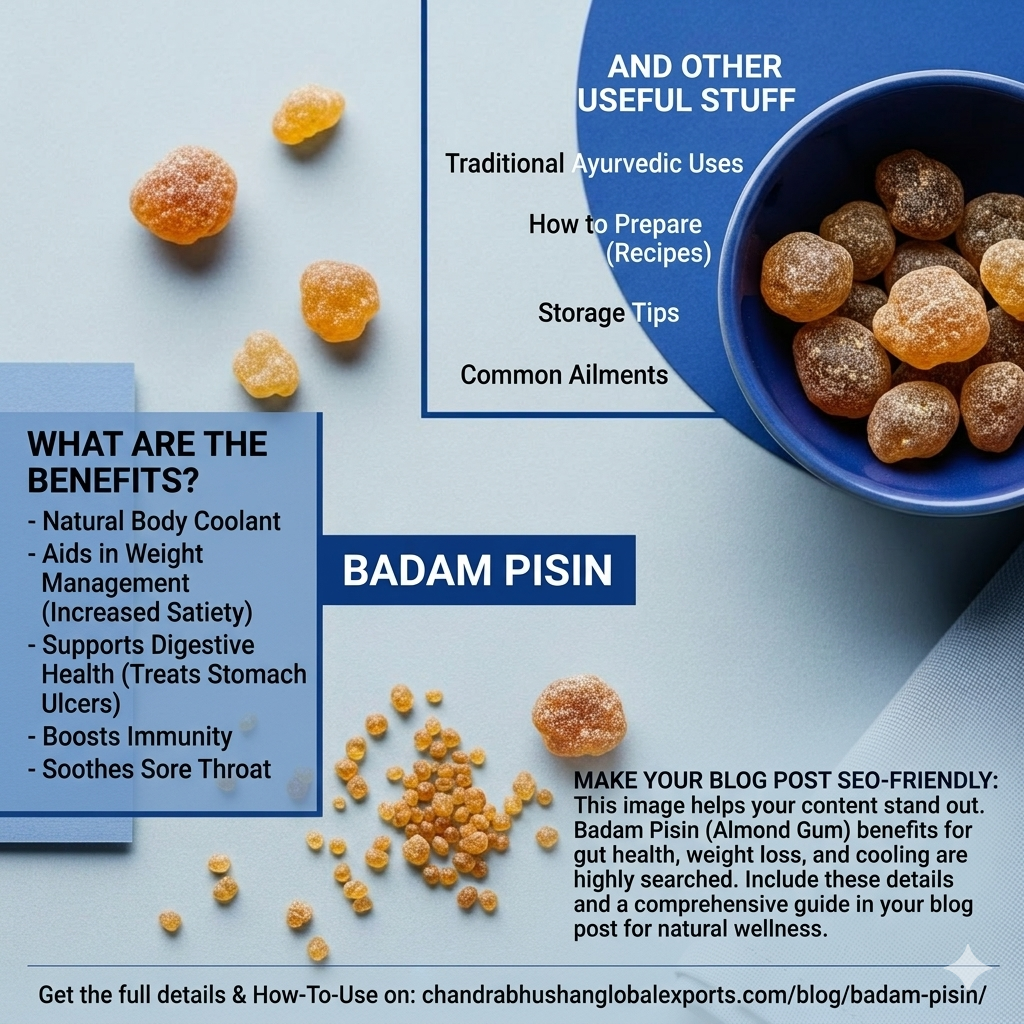
What is Badam Pisin?
Think of badam pisin as nature’s own cooling gel. It’s a dried resin sometimes called almond gum or almond pisin that oozes out naturally from the trunk and branches of sweet almond trees (scientifically known as Prunus dulcis) when the bark is injured. The tree essentially secretes this gum to protect itself, and once it dries, it forms hard, translucent amber-coloured crystals.
In English, it’s most commonly called almond gum. In Hindi, it goes by badam pisin or badam gondh. At this is called Tamil Nadu especially, it’s been used for generations in traditional drinks like nannari sherbet and summer coolers long before anyone called it a “superfood.”
Chemical Nature
Badam pisin is mostly carbohydrates over 90% of its dry weight particularly complex polysaccharides like arabinogalactan. It also contains small amounts of minerals such as calcium, potassium, magnesium, and iron. The fat content is negligible (under 1%), making it very different from the almond nut itself.
Geographical Orgin
In India and Tamil Nadu specifically, badam pisin is particularly popular during the peak summer months of April to June, when body heat, dehydration, and digestive distress are common complaints. (Internal link: Summer Cooling Foods of India)
7 Key Benefits of Badam Pisin You Should Know
1. It Cools the Body from the Inside Out
If there’s one thing badam pisin is most celebrated for, it’s its natural cooling effect. In Ayurveda, it is classified as a “sheetal” (cooling) substance that helps reduce internal body heat what’s traditionally referred to as “pitta” aggravation. when you soak badam pisin overnight, it absorbs a large volume of water and forms a hydrating gel. When you consume this gel say, mixed in cold milk or rose water that high water content slowly releases into your system, keeping you cool and hydrated from within. This is especially helpful during Indian summers, when heat exhaustion and excessive sweating drain the body of fluids rapidly.
2. Supports Digestive Health and Gut Balance
Badam pisin behaves similarly to dietary fibre in the gut. Its polysaccharide content acts as a prebiotic meaning it feeds the beneficial bacteria in your intestines rather than being digested itself. A well-fed gut microbiome means smoother digestion, reduced bloating, and more regular bowel movements.
Research on polysaccharides from almond gum shows that they can promote the growth of healthy intestinal bacteria, supporting a balanced gut environment. This is particularly valuable in a country like India, where spicy food, irregular meal timings, and seasonal changes frequently disrupt digestive balance.
3. Badam Pisin Benefits for Female Health
Body heat regulation during menstruation:
Many women experience increased body temperature and inflammation during their cycle. The cooling and mild anti-inflammatory properties of badam pisin may help ease this discomfort when consumed regularly.
Postpartum strength and nourishment:
In traditional South Indian households, soaked badam pisin mixed with warm milk, jaggery, and dry fruits is often given to new mothers. Its easily digestible carbohydrate structure provides gentle energy without taxing the digestive system something essential during postpartum recovery.
Skin hydration during hormonal changes:
Hormonal shifts whether during menstruation, pregnancy, or menopause often lead to dry, dull skin. Badam pisin’s moisture-retaining properties support skin hydration from the inside, which we’ll explore more under the skin section.
Weight management support: Badam pisin’s ability to create a sense of fullness (satiety) due to its gel-forming nature can help women manage unnecessary snacking between meals, especially during hormonal cravings. (Internal link: Natural Ways to Support Hormonal Balance)
4. Badam Pisin Benefits for Male Health
Energy and stamina:
The complex carbohydrates in badam pisin provide a slow, sustained release of energy helpful for men who are physically active, follow workout routines, or have physically demanding jobs. Unlike sugar-loaded energy drinks, this is clean fuel.
Post-workout recovery:
Combining soaked badam pisin with a protein-rich drink like milk or a banana smoothie creates a naturally functional recovery drink that supports hydration and provides mild energy replenishment without artificial additives.
Digestive support for high-protein diets:
Men following high-protein diets often experience digestive heaviness or constipation. Badam pisin’s prebiotic fibre helps counteract this by keeping the gut moving efficiently.
World Trade Data point:
India’s sports nutrition market was valued at over USD 350 million in 2023 and is growing steadily yet many fitness enthusiasts remain unaware of natural alternatives like badam pisin that offer hydration and energy support without synthetic ingredients.
5. Badam Pisin for Skin: Hydration and Natural Glow
One of the lesser-known but exciting uses of badam pisin is in skincare both internal and external. Its polysaccharide chains have the ability to form a lightweight moisture-retaining film on the skin’s surface. When consumed regularly, badam pisin supports skin hydration from within by keeping the body well-hydrated. This translates to plumper, more elastic-looking skin the kind that’s harder to achieve with topical products alone.
For skin whitening or brightening:
While badam pisin itself is not a bleaching agent, improved hydration, reduced inflammation, and better gut health collectively contribute to a clearer, more even complexion. Many people who start using it as a summer cooler notice their skin looks fresher over time not because of any direct pigmentation effect, but because of overall improved internal health.
6. May Support Weight Loss Goals
When you consume this gel before a meal or as part of a morning drink, it occupies space in your stomach, creating a sensation of fullness. This reduces the likelihood of overeating during the meal.
Additionally, since badam pisin is very low in calories and contains no fat, it adds volume to your diet without adding significant energy. Think of it as the plant-based equivalent of drinking a glass of water before a meal but with additional fibre and mineral content.
For best results with weight management, consume 1 teaspoon of soaked badam pisin (from ¼ tsp dry gum) in a glass of water or low-calorie drink about 30 minutes before your heaviest meal of the day.
7. Antimicrobial Properties and Immune System Support
Preliminary laboratory studies have shown that almond gum polysaccharides may possess mild antimicrobial activity against certain bacteria. While this doesn’t mean badam pisin replaces antibiotics or medical treatment, it suggests a supportive role in reducing harmful bacterial load particularly relevant for gut health.
Its antioxidant content further contributes to immune support by neutralizing free radicals unstable molecules that damage cells and accelerate aging. Combined with its prebiotic effect (which directly supports gut-associated immunity a major part of the body’s overall immune defence), badam pisin earns its place as a functional food with multiple layers of benefit.
When You Ignore Hydration and Gut Health?
Chronic dehydration
It leads to more than just thirst. It contributes to persistent fatigue, brain fog, dry skin, kidney stress, poor digestion, and in severe cases, heat stroke. According to the WHO, dehydration reduces physical and cognitive performance even at just 2% body water deficit. In Indian summers, where temperatures routinely cross 40°C in many cities, this becomes a real daily risk.
Poor gut health
It is driven by ultra-processed foods, excessive sugar, antibiotics, and chronic stress, leads to what researchers call “dysbiosis” an imbalance in gut bacteria. This doesn’t just cause bloating and irregular bowels. Growing evidence links dysbiosis to skin conditions (acne, eczema), weakened immunity, mood disorders, and metabolic issues including weight gain and insulin resistance.
The Science of Badam Pisin
Functional food applications
Researchers have confirmed that almond gum is an effective natural thickener, emulsifier, and stabilizer in food products. It improves texture in frozen desserts, prevents large ice crystal formation in ice cream, and extends the shelf life of fresh produce when used as an edible coating. These are not just culinary tricks they demonstrate the gum’s strong molecular properties.
Pharmaceutical use
In tablet formulations, almond gum has been tested as a binding agent meaning it holds tablet ingredients together without synthetic chemicals. Studies have also explored its use as a vegetarian alternative to gelatin in capsule shells, making it relevant for those who avoid animal-derived products. This is FDA and EFSA-recognized territory, meaning badam pisin is approved for food-grade use under specified conditions.
Prebiotic confirmation:
A notable study on the water-soluble polysaccharides from almond gum confirmed functional and prebiotic properties meaning the gum actively supports beneficial gut bacteria growth. This was measured using standard fermentation testing with human gut microbiota samples.
Wound healing:
Animal-model studies have shown that applying almond gum to skin wounds accelerated tissue repair and recovery. Human clinical trials are still limited, but the early data is promising.
Important caveat:
Most current research is lab-based or preliminary. Large-scale human clinical trials are still needed to fully confirm and quantify many of badam pisin’s health claims. This doesn’t diminish its traditional value it just means the science is catching up to what Indian grandmothers have known for generations.
World Trade Data point:
Over 21,000 plant species are used medicinally worldwide, with approximately 2,500 found in India alone badam pisin (almond gum) is among those with increasing scientific documentation. The global plant gum market (which includes almond gum, guar gum, acacia gum) is projected to reach USD 9.4 billion by 2028, reflecting surging demand for natural food and pharmaceutical ingredients.
Insights: Regular Users Notice About Badam Pisin
- The swelling is surprising at first. A quarter teaspoon of dry badam pisin expands to fill almost a full cup of water after overnight soaking. New users often use too much dry gum and end up with far more than they can consume.
- It has no strong flavour on its own. Soaked badam pisin is tasteless and slightly slippery it takes on the flavour of whatever you mix it with. This makes it extremely versatile and easy to add to drinks, desserts, or even plain water.
- Consistency matters more than quantity. People who use it daily even in small amounts report better results (smoother digestion, reduced body heat) than those who use large quantities inconsistently.
- Summer is the best time to start. Most people who try badam pisin during peak summer report the most noticeable cooling effect. Starting in March or April, before the heat peaks, gives the body time to adjust.
- It should never be eaten dry. Eating dry, unsoaked badam pisin crystals is genuinely risky they can swell in the throat and cause choking. Always soak until fully soft before consuming.
How to Use Badam Pisin: Step-by-Step and Recipe Ideas
The Golden Rule: Always Soak First
Take ¼ to ½ teaspoon of dry badam pisin crystals. Soak them in a bowl of water for 8 to 12 hours (overnight works perfectly). By morning, the crystals will have absorbed the water and expanded into soft, clear jelly-like globules. Rinse once, and they’re ready to use.
How much badam pisin per day?
¼ teaspoon of dry badam pisin (which becomes about 2-3 tablespoons of soaked gel) is a good daily dose for most adults. For therapeutic purposes or during peak summer, ½ teaspoon dry (soaked) is generally considered safe. Avoid exceeding this without consulting a doctor.
3 Simple Badam Pisin Recipes to Try at Home
1. Classic Badam Pisin Rose Milk
Mix soaked badam pisin gel into cold full-fat or plant-based milk. Add a teaspoon of rose syrup or gulkand (rose petal preserve), a pinch of cardamom, and a few strands of saffron. Stir and serve chilled. This is the quintessential Tamil summer drink.
2. Badam Pisin Lemon Cooler
Add soaked badam pisin to a glass of fresh lemon water with a pinch of black salt and rock sugar (mishri). This is a zero-refined-sugar hydration drink perfect for office afternoons or post-exercise recovery.
3. Badam Pisin Energy Pudding (for weight gain)
Mix soaked badam pisin into a bowl with warm milk, 2 teaspoons of honey, crushed dry fruits (dates, walnuts, cashews), and a tablespoon of soaked sabja (basil seeds). Let it set for 10 minutes. This works as a nourishing breakfast for those looking to gain healthy weight.
(Internal link: Summer Drinks for Natural Hydration)
Pros and Cons of Badam Pisin
The Pros
- Natural and plant-derived no synthetic additives, preservatives, or artificial flavours needed
- Extremely versatile works in drinks, desserts, face packs, and even pharmaceutical applications
- Low in calories negligible fat content makes it suitable even for those watching their weight
- Safe for most people including children, elderly, and pregnant women (in moderate amounts)
- Supports multiple body systems from gut to skin to immune health
The Cons
- Requires advance preparation overnight soaking is non-negotiable; it can’t be used dry or in a hurry
- Texture is not for everyone the slimy, gel-like consistency can feel odd initially, especially for those unfamiliar with similar ingredients like sabja or chia
- Can cause digestive discomfort if overused bloating and loose stools are possible if you consume too much or don’t soak it long enough
- Potential drug interaction its gel-forming nature may slow oral medication absorption; take medications 1-2 hours apart from badam pisin consumption
- Rare allergy risk people with tree nut allergies should use caution and consult a doctor before adding it to their diet
Badam Pisin Side Effects
Digestive discomfort
Consuming too much can cause bloating, excess gas, or loose stools because the gum absorbs water in the intestine and may over-stimulate bowel movement. Stick to the recommended dosage and increase gradually if needed.
Choking hazard if unsoaked:
This cannot be overstated. Raw badam pisin is hard and can swell rapidly in the throat if swallowed dry. Always soak fully until soft before consuming.
Medication absorption interference:
The gel-like substance can coat the stomach lining and slow down the absorption of oral medications. If you’re on regular medication, space your badam pisin consumption at least 1-2 hours away from your medicines.
Allergy risk:
While rare, individuals who are allergic to almonds or tree nuts may react to badam pisin. Start with a very small amount and watch for any signs of itching, hives, or throat swelling. Discontinue immediately and consult a doctor if any reaction occurs.
Not a replacement for medical treatment:
Badam pisin supports health it is not a cure for any medical condition. Anyone with chronic illness, diabetes, or hormonal conditions should consult their doctor before using it therapeutically.
People Also Ask
1. What is badam pisin used for?
Badam pisin (almond gum) is used primarily as a natural coolant during summer, a digestive support aid, a skin hydrator, and a functional ingredient in traditional Indian drinks and desserts. It is also used in food manufacturing as a natural thickener and in pharma as a vegetarian capsule alternative.
2. Is badam pisin good for weight loss?
Yes, badam pisin can support weight loss when used consistently. Its gel-forming property creates a feeling of fullness, reducing overeating. It is also extremely low in calories and contains no fat. However, it works best as part of a balanced diet and active lifestyle not as a standalone weight loss solution.
3. How much badam pisin should I take per day?
For most adults, ¼ teaspoon of dry badam pisin (soaked overnight in water) per day is sufficient. During peak summer or for specific health goals, ½ teaspoon (soaked) is generally considered safe. It’s always wise to start small and assess your body’s response before increasing the amount.
4. Is badam pisin safe during pregnancy?
Badam pisin is traditionally given to pregnant and postpartum women in small amounts in India and is considered generally safe. However, pregnant women should consult their doctor before adding any new supplement or functional food to their diet, as individual health conditions vary.
5. Can badam pisin be taken daily?
Yes, badam pisin can be consumed daily in moderate amounts. In fact, consistency is key most of its benefits (for digestion, hydration, and skin) become noticeable only after regular use over a few weeks. Just stick to the recommended quantity and always ensure it’s fully soaked before consumption.
6. Does badam pisin affect blood sugar levels?
Badam pisin is low in sugar and high in complex polysaccharides, which are digested slowly. This means it is unlikely to cause blood sugar spikes. Preliminary studies even suggest it may have mild blood glucose-moderating effects. However, people with diabetes should consult their doctor and monitor their levels when adding any new food to their routine.
Frequently Asked Questions
Q1. What is badam pisin in English and Hindi/
Badam pisin is called almond gum or almond resin. In Hindi, it is known as badam gondh or badam pisin. It comes from the trunk of the sweet almond tree (Prunus dulcis) and is commonly used in South Indian cuisine and traditional wellness practices across India.
Q2. Can I use badam pisin for skin whitening?
Badam pisin does not bleach or whiten skin directly. However, its ability to deeply hydrate the body (when consumed) and moisturize the skin (when applied topically) contributes to a brighter, more even complexion over time. Improved gut health from regular use also often reflects positively on skin clarity and texture.
Q3. Where can I buy badam pisin?
Badam pisin is widely available in South Indian grocery stores, Ayurvedic pharmacies, and online platforms across India. Look for products that are chemical-free, preservative-free, and naturally dried. Store it in an airtight container in a cool, dry place refrigeration is not necessary.
Q4. Is badam pisin the same as sabja (basil seeds)?
No, they are completely different. Sabja (also called tukmaria or basil seeds) comes from sweet basil plants and is smaller, black, and rounder. Badam pisin comes from almond trees and appears as larger, amber-coloured irregular crystals. Both swell when soaked and have cooling properties, but their nutritional profiles and plant sources are different.
Q5. Can children have badam pisin?
Yes, badam pisin is traditionally given to children in India typically added to milk or rose water as a summer cooling drink. Start with a very small quantity (a few soaked pieces) and ensure it is completely soft before giving it to young children to avoid any choking risk.
Q6. How long does it take for badam pisin to show results?
Most people notice better hydration and cooling almost immediately after the first use, especially in summer. Digestive improvements (reduced bloating, more regular bowels) typically become noticeable within 2-3 weeks of daily use. Skin changes, if any, take 4-6 weeks of consistent intake to become visible.