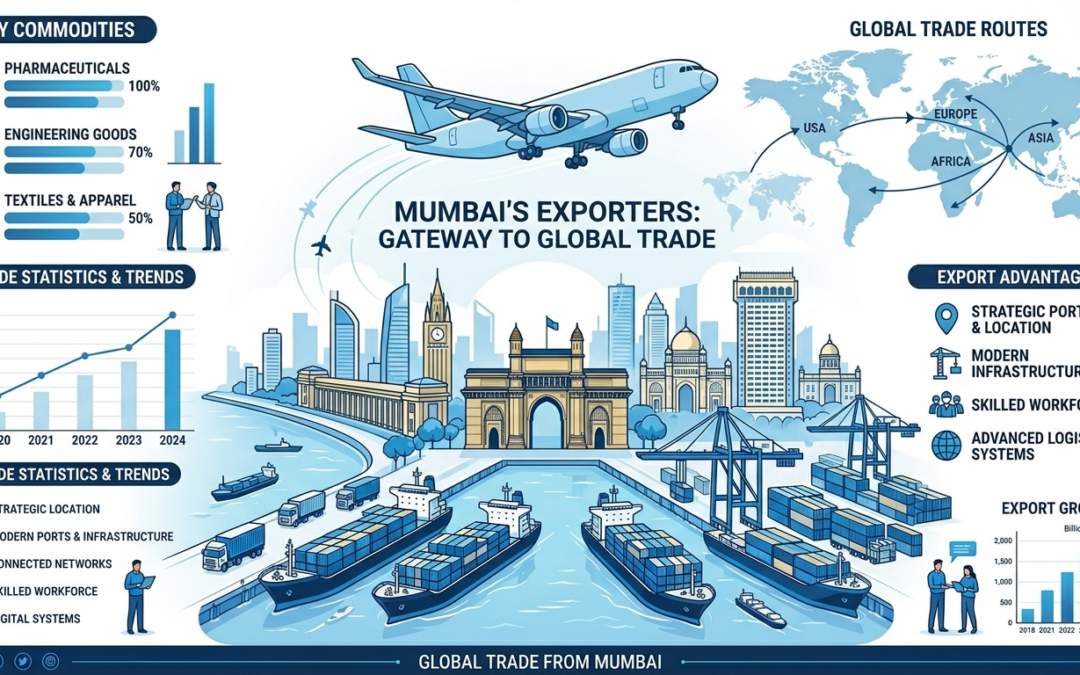
Mumbai has earned its reputation as India’s gateway to the world and for good reason. The city is home to thousands of exporters who ship everything from pharmaceutical medicines to spices, textiles, engineering goods, and more to over 150 countries every single day. If you’re looking to understand exporters in Mumbai, whether you’re a business owner, job seeker, or someone interested in India’s trade landscape, this guide breaks down exactly what you need to know.
The export industry in Mumbai alone contributes over $40 billion annually to India’s economy. With deep-water ports, established logistics networks, and decades of international trade relationships, the city has become an indispensable hub for companies looking to reach global markets.
Table of Contents
- What Are Exporters and Why Mumbai Matters
- Types of Exporters Operating in Mumbai
- Top 7 Benefits of Working with Export Companies in Mumbai
- The Real Challenges Facing Mumbai’s Exporters
- Deep Dive: Specializations Across Export Categories
- How to Start an Export Business in Mumbai
- Key Takeaways & Next Steps
What is exporter in mumbai
Exporters in Mumbai are businesses that manufacture, trade, or facilitate the shipping of goods from India to international markets. These aren’t just large corporations; Mumbai’s export ecosystem includes small family-owned businesses, mid-sized manufacturing firms, and global corporations with headquarters in the city.
Demography for Export
Mumbai is one of India’s biggest export hubs because it combines world-class shipping infrastructure, international ports, strong logistics networks, financial institutions, and excellent global business connectivity. Exporters in Mumbai deal with a wide range of products, including pharmaceuticals, textiles, spices, chemicals, engineering goods, jewelry, food products, machinery, and industrial components. Its strategic coastal location and dense commercial ecosystem make it a preferred base for businesses involved in import-export activities.
The Port of Mumbai
A major maritime gateway that supports large-scale cargo movement and international trade.
Jawaharlal Nehru Port Trust (JNPT)
One of Asia’s most important and deepest natural harbors, handling a significant share of India’s container traffic.
Direct air cargo facilities
Linking Mumbai to 80+ international destinations and supporting faster shipments for time-sensitive goods.
Established customs and freight forwarding infrastructure
A long-standing trade ecosystem that helps streamline export procedures, reduce delays, and support efficient documentation.
Types of Exporters Operating in Mumbai
Mumbai’s export sector is incredibly diverse. Understanding the different categories helps clarify which exporters might be relevant to your needs.
Pharmaceutical Exporters in Mumbai
Mumbai is home to India’s pharmaceutical heartland. The city hosts manufacturing units for major drug companies and pharmaceutical exporters who supply medicines, APIs (Active Pharmaceutical Ingredients), and medical devices worldwide.
Pharma exporters in Mumbai cater to regulated markets like the USA, EU, and Canada, which means they operate under strict GMP (Good Manufacturing Practice) standards. These companies often have dedicated quality assurance teams and certifications from international regulatory bodies.
Spice and Agricultural Exporters
India’s spice export business is largely concentrated in Mumbai. Companies specializing in cardamom, cumin, turmeric, black pepper, and other spices operate from the city’s bustling wholesale markets and modern packaging facilities.
Spices exporters in Mumbai leverage India’s natural competitive advantage in spice production, combined with modern export infrastructure. Many have moved into value-added products like spice blends and organic certifications.
Textile and Apparel Exporters
The textile industry contributes significantly to Mumbai’s export numbers. Export companies in Mumbai manufacture everything from cotton fabrics to ready-made garments, serving major global retailers and brands.
Engineering and Automotive Parts Exporters
Engineering goods exporters in Mumbai supply machinery, automotive components, and metal products to countries across Asia, Europe, and the Americas. These exporters often operate with sophisticated manufacturing capabilities and quality certifications.
General Trading and Import-Export Companies
Beyond manufacturers, import and export companies in Mumbai act as intermediaries—sourcing products from manufacturers across India and facilitating international sales. These trading firms handle everything from logistics to customs clearance.
Benefits of Working with Export Companies in Mumbai
1. Access to World-Class Port Infrastructure
Mumbai’s ports can accommodate the largest cargo vessels and handle containerized goods efficiently. This translates to faster turnaround times and competitive shipping rates for businesses.
Why it matters: A 3-day faster port clearance can save export companies thousands in operational costs.
2. Pre-Established International Trade Networks
Export companies in Mumbai have decades of relationships with customs brokers, shipping lines, and international buyers. These networks reduce entry barriers for new exporters.
Experienced exporters in the city often maintain direct relationships with major logistics providers like DHL, FedEx, and major shipping lines, giving them negotiating leverage.
3. Access to Skilled Workforce and Expertise
The city attracts talent from across India—quality assurance specialists, export managers, customs consultants, and logistics professionals. Many export-related educational programs operate in Mumbai, creating a steady talent pipeline.
4. Proximity to Manufacturing Hubs
While Mumbai itself isn’t primarily a manufacturing city, it’s within 500 km of major industrial areas in Gujarat and Maharashtra. This proximity reduces supply chain friction for exporters coordinating with manufacturers.
5. Advanced Cold Chain and Specialized Handling
Exporters in Mumbai investing in cold storage facilities can handle perishable goods like fresh produce, seafood, and dairy products. This opens doors to high-value agricultural exports.
6. Government Support and Export Promotion Zones
The Maharashtra government actively supports export businesses through schemes, tax incentives, and dedicated export processing zones. Export House and Star House certifications offer regulatory advantages.
7. Digital Infrastructure and Export Documentation Tools
Modern exporters in Mumbai leverage digital platforms for customs documentation, invoicing, and logistics tracking. Systems like the IEC (Importer Exporter Code) registration, e-filing with DGFT, and online bill of lading are standard practice.
The Challenges Facing Mumbai’s Exporters
While Mumbai offers major advantages for global trade, exporters also face a set of practical and costly challenges that can affect margins, timelines, and customer satisfaction.
Rising Logistics Costs
Fuel surcharges, port congestion, warehouse expenses, and increasing handling charges have pushed export costs higher over the past few years. These added expenses can make it difficult for exporters to maintain healthy profit margins, especially for small and mid-sized businesses that operate on tighter budgets.
Intense Global Competition
Exporters in Mumbai are not only competing with businesses across India, but also with lower-cost supply markets such as Vietnam, Bangladesh, and China. This means they must constantly balance competitive pricing, product quality, packaging standards, and delivery speed to stay relevant in international markets.
Regulatory Complexity
Export documentation can be time-consuming and highly detailed. Depending on the product and destination, shipments may require DGFT-related processes, customs declarations, port clearances, compliance certificates, and in some cases health, safety, or product-specific approvals. Even a minor documentation error can lead to delays, penalties, or shipment hold-ups.
Currency Volatility
The Indian rupee’s movement against major currencies such as the US dollar and euro creates uncertainty for exporters who quote prices in foreign currency. Sudden exchange rate fluctuations can reduce expected earnings, affect contract values, and complicate long-term pricing strategies.
Supply Chain Disruptions
Mumbai exporters often depend on manufacturers, suppliers, transport partners, and freight handlers working in sync. If any part of that chain is delayed, the entire export schedule can be affected. Raw material shortages, delayed production, missed transport connections, or port-side bottlenecks can all create shipment delays and customer dissatisfaction.
Specializations Across Export Categories in Mumbai
Mumbai’s export ecosystem is highly diversified, supporting industries ranging from pharmaceuticals and spices to engineering goods, garments, chemicals, and food processing. The city’s access to international ports, logistics infrastructure, financial institutions, and customs support has helped exporters in Mumbai build strong connections with global markets.
Today, import export companies in Mumbai are not limited to South Mumbai or traditional business districts. Major export activity is now spread across Navi Mumbai, Vasai, Virar, and surrounding industrial zones, creating a broader and more efficient export network.
Pharma Exporters in Mumbai: Understanding the Regulatory Landscape
Pharma exporters in Mumbai operate in one of the most regulated export industries in the world. Exporting medicines, medical formulations, APIs, and healthcare products requires strict compliance with Indian and international regulations.
DCGI and International Regulatory Approvals
Pharmaceutical exporters must secure approvals from the Drugs Controller General of India (DCGI) while also complying with regulations set by importing countries. Depending on the destination market, exporters may need certifications from organizations such as:
- US FDA
- WHO-GMP
- EU Regulatory Authorities
- MHRA (United Kingdom)
The approval and registration process for new international markets can take anywhere from 6 to 18 months. This includes product testing, documentation verification, stability studies, labeling compliance, and manufacturing audits.
Mumbai’s Role in India’s Pharma Exports
Mumbai acts as a central coordination hub for pharmaceutical exports because of its strong logistics ecosystem and documentation infrastructure.
Key advantages include:
- Access to international air cargo facilities
- Proximity to major ports
- Availability of customs clearance specialists
- Established freight forwarding services
- Advanced warehousing and cold-chain logistics
A significant portion of India’s pharmaceutical export operations are managed through Maharashtra, with Mumbai playing a leading role in shipment coordination and export compliance.
Spices Exporters in Mumbai: From Farm to Global Markets
Spices exporters in Mumbai connect agricultural producers across India with international buyers worldwide. The process involves sourcing raw spices from producing states, processing them in centralized facilities, and exporting them to global food and retail markets.
How the Spice Export Supply Chain Works
Most exporters source spices directly from agricultural regions such as:
- Andhra Pradesh for turmeric and chili
- Kerala for cardamom and black pepper
- Gujarat for cumin
- Rajasthan for coriander
After procurement, spices are transported to processing units around Mumbai where they undergo cleaning, grading, drying, packaging, and quality inspection before export.
Quality Standards for Spice Exports
International buyers demand strict compliance with food safety standards. As a result, spices exporters in Mumbai must maintain:
- Fungicide residue testing
- Traceability documentation
- Moisture and purity testing
- Packaging compliance
- Hygiene and contamination control
Many exporters also pursue certifications such as Organic, HACCP, ISO, and Fairtrade to access premium international markets and improve brand credibility.
Export Companies in Navi Mumbai and Expanding Trade Corridors
Over the past decade, export companies in Navi Mumbai have grown rapidly because of lower operational costs and proximity to major shipping infrastructure.
Why Navi Mumbai Is Becoming an Export Hub
Many import export companies in Mumbai are shifting warehousing and operational functions to Navi Mumbai for several strategic reasons:
- Lower commercial real estate costs
- Better industrial planning
- Modern warehouse infrastructure
- Faster connectivity to JNPT
- Reduced congestion compared to central Mumbai
This transition has made Navi Mumbai one of the fastest-growing logistics and export support zones in Maharashtra.
The Advantage of JNPT Connectivity
The Jawaharlal Nehru Port Trust (JNPT) is India’s largest container port and a major advantage for exporters operating in Navi Mumbai.
Businesses located nearby benefit from:
- Faster cargo movement
- Reduced transportation delays
- Lower logistics costs
- Better container availability
- Improved export efficiency
Import Export Jobs in Mumbai
The export industry is also a major employment generator, creating opportunities across logistics, compliance, operations, warehousing, and international trade management.
Popular Import Export Jobs in Mumbai
Export Managers
Export Managers oversee buyer relationships, shipment schedules, pricing negotiations, and international trade operations. They play a key role in maintaining communication with overseas clients and ensuring smooth exports.
Customs Consultants
Customs professionals help businesses navigate export regulations, documentation requirements, duty structures, and clearance procedures.
Quality Assurance Specialists
Quality experts ensure exported products meet international standards and buyer specifications before dispatch.
Logistics Coordinators
Logistics professionals manage cargo tracking, freight scheduling, warehouse coordination, and transportation planning.
Growing Career Opportunities in the Export Sector
With rising international trade activity, import export jobs in Mumbai continue to expand across industries such as:
- Pharmaceuticals
- Chemicals
- Engineering goods
- Textiles
- Food exports
- Consumer products
Professionals with knowledge of supply chain management, customs documentation, freight forwarding, and international business are increasingly in demand.
Exporters in Navi Mumbai, Vasai, and Virar
Export operations are no longer concentrated only in central Mumbai. Industrial growth has expanded into surrounding regions that offer lower operational costs and growing infrastructure support.
Exporters in Navi Mumbai
Navi Mumbai has evolved into a major logistics and industrial corridor supporting exporters across multiple sectors.
Key industries include:
- Pharma
- Chemicals
- Engineering goods
- Electronics
- Consumer products
Its organized industrial zones and warehouse ecosystem make it highly attractive for large-scale exporters.
Exporters in Vasai
Vasai is emerging as an important manufacturing and export-support zone for small and medium businesses.
Popular industries in Vasai include:
- Furniture manufacturing
- Packaging materials
- Garments
- Engineering products
- Fabrication units
Lower rentals and expanding industrial estates have encouraged many exporters to establish operational facilities here.
Exporters in Virar
Virar is becoming a cost-effective destination for SMEs and merchant exporters seeking affordable business expansion options.
Why Virar Is Attracting Small Exporters
Key advantages include:
- Lower operational expenses
- Affordable warehousing
- Expanding infrastructure
- Access to the wider Mumbai logistics network
Virar is particularly suitable for businesses dealing with lower-volume shipments and less time-sensitive export categories.
The Future of Exporters in Mumbai
Exporters in Mumbai continue to benefit from the city’s strategic coastal location, global trade connectivity, and evolving logistics ecosystem. As infrastructure expands across Navi Mumbai, Vasai, and Virar, businesses now have more opportunities to scale operations efficiently while reducing costs.
How to Start an Export Business in Mumbai
Step 1: Obtain Your Importer-Exporter Code (IEC)
The IEC is your golden ticket. Apply online through the DGFT portal. Processing takes 15–20 days. Cost: ₹0 (free).
Step 2: Register Your Business Structure
Decide between sole proprietorship, partnership, or private limited company. A private limited company offers more credibility with international buyers and better borrowing capacity.
Step 3: Set Up Bank Accounts and Payment Gateway
Open a current account with FCRA (Foreign Currency Retained Account) status. This allows you to hold and transact in foreign currencies without converting to INR immediately.
Step 4: Connect with Customs Brokers and Freight Forwarders
Build relationships with licensed customs brokers in your port city. They handle documentation and ensure compliance. Freight forwarders handle physical logistics.
Step 5: Identify Your Product and Market
Research market demand. Use trade databases like ITC Trade Map, UN Comtrade, and India’s Ministry of Commerce export statistics. Identify which countries import your product and at what volumes.
Step 6: Arrange Quality Certifications
Depending on your product, you may need:
- ISO 9001 (quality management)
- ISO 22000 (food safety)
- GMP (for pharma and food)
- Organic certification (for agricultural products)
- FAIR (Fair Trade)
Step 7: Develop Packaging and Labeling
International shipments require specific packaging to protect goods during long transit times. Labels must include country of origin, HS codes, and regulatory compliance information.
Step 8: Launch with Small Pilot Shipments
Start with 1–2 containers to international partners. Test the logistics, documentation process, and buyer feedback. Iron out issues before scaling.
Comparison of Export Specializations
| Export Category | Primary Cities in India | Key Markets | Typical Product Examples | Regulatory Complexity |
|---|---|---|---|---|
| Pharmaceutical | Mumbai, Ahmedabad, Bangalore | USA, EU, Japan | APIs, finished medicines, vaccines | Very High |
| Spices & Agri | Mumbai, Kochi, Chennai | Middle East, USA, EU | Turmeric, cardamom, cumin | Medium |
| Textiles | Mumbai, Surat, Tiruppur | Bangladesh, China, Europe | Fabric, garments, home textiles | Medium |
| Engineering Goods | Mumbai, Pune, Bengaluru | Southeast Asia, Middle East | Machinery, auto parts, metal products | Medium |
| Electronics | Bangalore, Noida, Mumbai | USA, EU, East Asia | Components, devices | High |
How Import Export Companies in Mumbai Operate
Import export companies in Mumbai usually follow a structured process that combines product research, buyer outreach, documentation, logistics, and payment management. Because Mumbai is one of India’s strongest trade gateways, exporters can use the city’s port access, air cargo network, and financial ecosystem to manage international shipments more efficiently.
Step 1: Product Sourcing
The first step is identifying products that have strong demand in foreign markets. Exporters often research market trends, buyer preferences, pricing potential, and regulatory requirements before selecting a product category.
Step 2: Buyer Acquisition
Once a product is finalized, exporters begin finding international buyers. Common buyer acquisition channels include trade fairs, B2B marketplaces, LinkedIn, international exhibitions, and export councils. These platforms help businesses connect with distributors, wholesalers, retailers, and import agents across different countries.
Step 3: Documentation
Export documentation is a critical part of the process. Common documents include the IEC code, commercial invoice, packing list, bill of lading, and certificate of origin. Depending on the product and destination country, additional compliance documents may also be required.
Step 4: Shipping and Logistics
After documentation is complete, the goods are shipped through sea cargo or air freight. The choice depends on the product type, shipment volume, delivery timeline, and cost considerations. Sea freight is usually preferred for bulk shipments, while air freight is used for urgent or high-value goods.
Step 5: Payment Settlement
International payments are generally handled through banks using letters of credit, wire transfers, or export financing systems. Proper payment management is important because it protects cash flow and reduces transaction risk.
Benefits of Starting an Export Business in Mumbai
Starting an export business in Mumbai offers several advantages because the city has strong trade infrastructure, business connectivity, and access to international markets.
Access to Global Markets
Mumbai gives exporters the ability to reach buyers in multiple countries instead of depending only on domestic demand. This opens the door to larger market opportunities and more diversified revenue streams.
Better Revenue Potential
Many products can earn stronger margins in international markets, especially when they are positioned well in terms of quality, branding, and packaging. For exporters with the right strategy, overseas sales can be significantly more profitable than local trade.
Strong Infrastructure
Mumbai offers access to ports, warehouses, freight forwarders, banking systems, customs support, and logistics providers. This makes it easier for businesses to manage shipments and maintain smoother trade operations.
Diverse Product Opportunities
Businesses in Mumbai can export a wide range of products, including agricultural goods, textiles, machinery, chemicals, pharmaceuticals, and food products. This diversity allows entrepreneurs to choose a segment that fits their budget, skills, and supply chain access.
Government Support
The Indian government periodically introduces export incentives, MSME support schemes, and trade promotion initiatives. These measures can help exporters reduce costs, improve competitiveness, and expand into new markets.
Pros and Cons of Export Business in Mumbai
The export business in Mumbai offers strong long-term potential because the city combines trade infrastructure, international connectivity, financial support, and access to a wide network of suppliers and logistics partners. At the same time, exporters must deal with compliance pressure, shipping costs, and market uncertainty. Understanding both sides is important before starting or scaling an export business in the city.
Pros of Export Business in Mumbai
Access to International Buyers and Markets
Mumbai gives exporters direct access to overseas markets through its ports, air cargo network, trade associations, and business ecosystem. This makes it easier to connect with buyers in the Middle East, Europe, Africa, Southeast Asia, and the United States. For businesses that want to grow beyond domestic demand, Mumbai offers a practical base for global trade expansion.
Strong Shipping and Logistics Connectivity
One of the biggest advantages of doing export business in Mumbai is the city’s logistics strength. Exporters can use sea freight for bulk shipments and air freight for time-sensitive goods. With access to major ports, freight forwarders, customs brokers, and bonded warehousing services, businesses can move goods more efficiently and with fewer operational barriers.
Wide Range of Export-Ready Industries
Mumbai supports a broad mix of industries, which gives exporters more product options. Businesses can export pharmaceuticals, textiles, chemicals, engineering goods, processed foods, spices, jewelry, and machinery. This diversity makes Mumbai suitable for both large-scale export houses and smaller merchant exporters looking for niche opportunities.
Better Revenue Growth Potential
Export markets often provide better pricing opportunities than local markets, especially when products are differentiated by quality, branding, or compliance standards. For many businesses, selling to international buyers can improve revenue stability and margin potential. A well-positioned export business in Mumbai can scale faster than a purely local trading business.
Supportive Financial and Business Ecosystem
Mumbai is India’s financial capital, which gives exporters easier access to banks, trade finance, insurance, foreign exchange services, and working capital solutions. This financial support is important because export businesses often require upfront investment in procurement, packaging, shipping, and documentation before payment is received.
Government and Institutional Support
Exporters in Mumbai can benefit from various government schemes, trade promotion programs, MSME support initiatives, and export councils. These support systems help businesses learn about compliance, explore foreign markets, and reduce entry barriers. For new exporters, this ecosystem can make the transition into international trade much smoother.
Cons of Export Business in Mumbai
High Operational and Logistics Costs
Mumbai is a high-cost business location. Office rentals, warehouse space, labor, transport, and port-related expenses can quickly add up. For smaller exporters, these costs can reduce profit margins and make it harder to compete with businesses operating from lower-cost cities or industrial zones.
Complex Compliance Requirements
Exporting is not a simple buy-and-sell activity. It requires detailed documentation, customs procedures, product certifications, tax compliance, and destination-specific regulations. Even experienced exporters must keep up with changing rules. A small error in paperwork or labeling can lead to delays, penalties, or cargo rejection.
Intense Global Competition
Exporters in Mumbai are not competing only with Indian businesses. They also compete with manufacturers and traders from China, Vietnam, Bangladesh, Turkey, and other export-driven economies. This creates constant pressure on price, quality, packaging, and delivery timelines. Businesses must stay highly efficient to remain competitive.
Exposure to Currency Risk
Foreign exchange fluctuations can affect profitability, especially when exporters quote prices in dollars or euros but incur costs in rupees. A sudden change in the exchange rate can reduce expected earnings or disrupt pricing agreements. This is a major risk for businesses that work on thin margins or long delivery cycles.
Freight Rate Volatility
Shipping costs do not remain stable. Fuel price changes, global shipping disruptions, port congestion, and container shortages can cause freight rates to rise unexpectedly. For exporters, this affects planning and can make international pricing less predictable.
Dependence on External Supply Chains
Many exporters depend on manufacturers, suppliers, packaging vendors, freight agents, and regulatory clearances. If one part of the chain breaks down, the entire export schedule may suffer. Delays in production or transport can damage buyer trust and affect repeat orders.
How Digital Marketing Helps Exporters in Mumbai
Digital marketing has become a powerful growth tool for exporters in Mumbai because it helps businesses reach international buyers faster, build credibility, and generate inquiries without relying only on physical trade events. In a competitive export environment, online visibility can make the difference between being discovered by overseas buyers and staying invisible in the market.
Builds Global Visibility
Exporters need more than a warehouse and a shipping process. They also need market visibility. Digital marketing helps businesses appear in search results when international buyers look for suppliers, manufacturers, or exporters online. A strong digital presence can position a Mumbai-based exporter in front of global prospects 24/7, which is especially useful for B2B lead generation.
Supports Buyer Trust and Brand Credibility
International buyers often research suppliers before making contact. They check websites, company profiles, product pages, certifications, and online reviews. A professional digital presence helps exporters look credible, organized, and export-ready. This is especially important in industries like pharmaceuticals, chemicals, food products, and engineering goods, where trust and compliance matter heavily.
Improves Lead Generation
Digital channels help exporters generate qualified leads from foreign markets. Instead of waiting for trade fairs or referrals, businesses can actively attract prospects through search engine optimization, Google Ads, LinkedIn outreach, email campaigns, and B2B platforms. This makes lead generation more predictable and scalable.
SEO Helps Exporters Rank for Product and Market Searches
Search engine optimization is one of the most valuable digital strategies for exporters. When buyers search for terms like “pharma exporters in Mumbai,” “spices exporters in India,” or “engineering goods exporter,” SEO helps the exporter’s website appear in relevant search results. This creates organic traffic and long-term visibility without depending entirely on paid advertising.
LinkedIn Helps Build B2B Connections
LinkedIn is especially useful for exporters because it supports professional networking and direct outreach. Exporters can use LinkedIn to connect with importers, sourcing managers, distributors, wholesale buyers, and trade consultants. A well-managed LinkedIn profile and company page can help businesses start conversations with serious international prospects.
B2B Portals Expand Reach
Platforms like IndiaMART, TradeIndia, Alibaba, and other B2B marketplaces allow exporters to list products, share company information, and receive buyer inquiries. These platforms help exporters gain exposure in markets they may not be able to reach through traditional offline methods alone. For smaller exporters in Mumbai, B2B portals can be a strong starting point.
Email Marketing Supports Buyer Follow-Up
Export sales usually require follow-up. Buyers may not convert after the first contact, especially in international trade where decision cycles are longer. Email marketing helps exporters stay in touch with prospects, share catalogues, send product updates, and nurture long-term relationships. This is especially useful for repeat sales and long buying cycles.
Google Ads Can Drive Targeted Traffic
Paid advertising helps exporters reach buyers who are actively searching for specific products or services. Google Ads can be used to target keywords related to export categories, product names, and buyer intent terms. This is useful for exporters who want faster results, especially when entering a new market or launching a new product line.
Helps Showcase Products Professionally
Digital marketing allows exporters to present products in a more structured and attractive way. High-quality product pages, brochures, videos, certifications, and case studies can be shared online to support buyer decision-making. For export businesses, this is often more effective than relying only on basic phone calls or manual presentations.
Reduces Dependency on Traditional Marketing
Earlier, exporters depended heavily on exhibitions, agents, and word of mouth. Digital marketing reduces this dependency by creating a steady online presence that works throughout the year. This is especially helpful for exporters in Mumbai who want to scale beyond local networks and enter wider global markets.
Helps Small Exporters Compete with Larger Brands
Digital tools give smaller exporters a chance to compete with established companies. Even a small export business can build a professional website, run targeted campaigns, optimize for search engines, and reach buyers globally. This levels the playing field to some extent and makes it easier for new businesses to enter the export market.
Supports Long-Term Market Expansion
Digital marketing is not just about generating leads. It also helps exporters understand demand patterns, buyer behavior, and market trends. By tracking website traffic, ad performance, and inquiry sources, exporters can make smarter decisions about which products to promote, which markets to target, and how to improve their positioning over time.
Import Export Course in Mumbai
Many entrepreneurs and job seekers enroll in import export courses in Mumbai to learn the basics of global trade operations before entering the field.
Topics Commonly Covered
These courses usually include export documentation, international shipping, customs procedures, trade finance, product sourcing, and international marketing.
Why These Courses Matter
For beginners, such training can make it easier to understand how export businesses actually work. It also helps reduce mistakes in documentation, logistics planning, and buyer communication.
Challenges Faced by Exporters in Mumbai
Mumbai offers a strong export environment, but exporters still face a number of operational and market-related challenges.
Currency Fluctuation
Foreign exchange movements can directly affect profitability, especially when contracts are priced in dollars, euros, or other major currencies.
International Compliance
Different countries maintain different import rules, product standards, and certification requirements. Exporters must stay updated to avoid shipment delays or rejections.
Logistics Costs
Freight charges, port handling fees, and shipping expenses can change quickly, affecting overall margins.
Global Competition
Indian exporters compete with suppliers from China, Vietnam, Bangladesh, and other export-oriented economies.
Documentation Complexity
Export procedures often require multiple forms, approvals, and compliance checks, which can be time-consuming for new businesses.
Common Myths About Export Businesses
Many people hesitate to enter exporting because of common misconceptions. In reality, the business is more accessible than most beginners assume.
Myth 1: Export Business Requires Huge Capital
Many merchant exporters start small and scale gradually as they build buyer relationships and market experience.
Myth 2: Only Big Companies Can Export
MSMEs and even individual entrepreneurs can enter international trade if they have the right product and process.
Myth 3: Exporting Is Extremely Complicated
While export work does involve documentation, modern digital systems have simplified many parts of the process.
Myth 4: You Need a Factory to Become an Exporter
Merchant exporters can source products from manufacturers instead of producing goods themselves. This makes the export model more flexible and accessible.
People Also Ask
What is the difference between an exporter and a trading company?
An exporter manufactures or sources goods and sells them to international buyers, managing the entire supply chain. A trading company acts as an intermediary, buying from manufacturers and reselling internationally without manufacturing. Both operate from Mumbai, but exporters have more control over product quality.
How long does it take to export goods from Mumbai?
From receiving an order to delivery typically takes 30–60 days for manufactured goods. Time depends on production lead time, customs clearance (3–7 days), and shipping duration (15–45 days depending on destination).
What qualifications do I need to work in export companies in Mumbai?
Most entry-level positions require a bachelor’s degree and basic knowledge of export documentation. Specialized roles like customs clearance require certification. An import export course in Mumbai (3–6 months) significantly boosts employability.
Are there export companies in Virar and Vasai besides Mumbai?
Yes. Virar and Vasai have emerged as satellite export hubs, hosting logistics parks and smaller export operations. They offer cost advantages but may have less access to specialized services compared to central Mumbai.
How do exporters in Mumbai handle currency risk?
Most use forward contracts to lock in exchange rates, hedging tools through banks, or price their exports in Indian rupees (riskier for buyers). Some maintain multi-currency accounts to naturally hedge.
What certifications are most valuable for exporters?
ISO 9001 (quality), ISO 22000 (food safety), GMP (pharma), and Fair Trade certifications are universally recognized. Industry-specific certifications (DGFT, APEDA) add credibility.
Frequently Asked Questions
What is an Export House certificate, and why does it matter?
An Export House certificate is awarded by DGFT to export-oriented businesses that meet minimum export turnover thresholds. It provides tax benefits, priority access to bank credit, and customs clearance flexibility. To qualify, a business must export goods worth ₹10 crores in a financial year.
How do I find reliable export companies in Mumbai for my product category?
Use DGFT’s exporters database, JustDial business directories, SeaOfIndia (industry chamber), and Maharashtra Directory’s merchant exporter listings. Attend trade shows like India International Trade Fair (IITF) held in Delhi, where Mumbai-based exporters showcase.
What is the typical timeline for getting DGFT approval for a new export product?
Most new product approvals take 15–30 days if all documents are in order. However, if your product requires special category certificates (for pharma, food, or chemicals), approvals can take 2–6 months.
Can I start an import-export business while employed?
Yes, you can operate a part-time trading business while employed, provided there’s no conflict of interest with your employer. Many entrepreneurs start this way, transitioning full-time once revenue grows.
What are the biggest expense categories for exporters in Mumbai?
The top expenses are: logistics and freight (35–40% of cost), packaging and labeling (10–15%), port charges and customs brokerage (8–12%), working capital and inventory financing (10–15%), and operations (quality, staff, office).
How do export companies in Mumbai handle international payments?
Through Letters of Credit (LC), bank transfers, or escrow. Exporters typically use international banks like HSBC, Citi, or DBS for foreign currency accounts. Digital platforms like Razorpay for Business and ICICI iConnect streamline international invoicing.
Key Takeaways
- Mumbai is the epicenter of India’s export ecosystem, with advantages in port infrastructure, supply chain networks, and regulatory expertise that no other Indian city matches.
- Specialization beats generalization. Whether pharma, spices, or textiles, exporters who focus deeply on a product category and market succeed better than those spreading thin.
- Regulatory compliance is non-negotiable. Documentation, certifications, and approvals are the foundation of every successful export business.
- Relationships matter deeply. Long-term buyer relationships, trusted customs brokers, and experienced freight forwarders form the backbone of efficient operations.
- Import export jobs are booming. If you’re job-seeking, the sector offers diverse roles across management, operations, and specialized expertise—with salaries ranging from ₹3–15+ lakhs annually.
- Training and upskilling matter. An import export course in Mumbai or online provides practical knowledge that accelerates your entry into the sector.
- Start small, scale strategically. Pilot shipments and single-market focus allow you to learn the system before expanding to multiple countries.
Ready to Explore Export Opportunities?
Whether you’re looking to start an export business, apply for import export jobs in Mumbai, or partner with exporters for your supply chain, understanding Mumbai’s export landscape is the crucial first step.
The city’s infrastructure, expertise, and international connections create genuine advantages—but success still requires dedication, compliance discipline, and strategic planning. Use the insights in this guide to inform your next move in India’s thriving export sector.